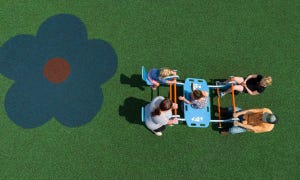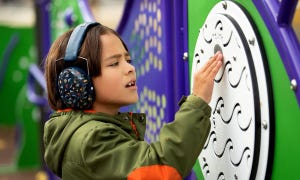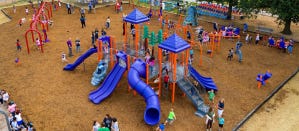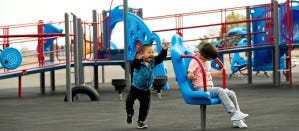
“Physical educators and programmers play a critical role in the planning and development of school playgrounds and the overall utilization of the space. Playgrounds are large investments for schools, and a thoughtful play space should provide a wide variety of activities that motivate, engage, and challenge all children. Planning a high‑quality playground design along with programming the space in and out of school time can positively impact students and community members.”
— Peggy Riggs, Ret. Superintendent, Springfield Greene County School District, Missouri
Combining resources from a school district and a parks and recreation department is a highly efficient way to build or renovate playgrounds. This partnership approach often requires less funding from each organization as they pool their resources, making large‑scale improvements more feasible. School playgrounds with school/park partnerships can be used in and out of school time to maximize usage during weekends, evenings, and school breaks.
The Park Equity Gap
For communities—especially those with limited park space—this expands access to safe, conveniently located areas for exercise and play. In many cities, low‑income neighborhoods and communities of color have fewer parks and green spaces. Partnering to open school playgrounds can help close the “park equity gap” and ensure all children have access to the developmental benefits of play. The Trust for Public Land estimates that opening all public schoolyards after school hours would put a park within a 10‑minute walk of 20 million people who don’t currently have access.
The Need for School Playgrounds
Springfield‑Greene County, MO understands the value of partnership. A pioneering city for school/park collaborations, many school playgrounds in Springfield are open to the public during non‑school hours. This partnership provides significant value by expanding community access, maximizing resources, and improving health and social outcomes for both children and adults. These collaborations—formalized through joint‑use agreements—address the issue of underutilized school facilities outside of school hours as well as resource constraints for community parks.
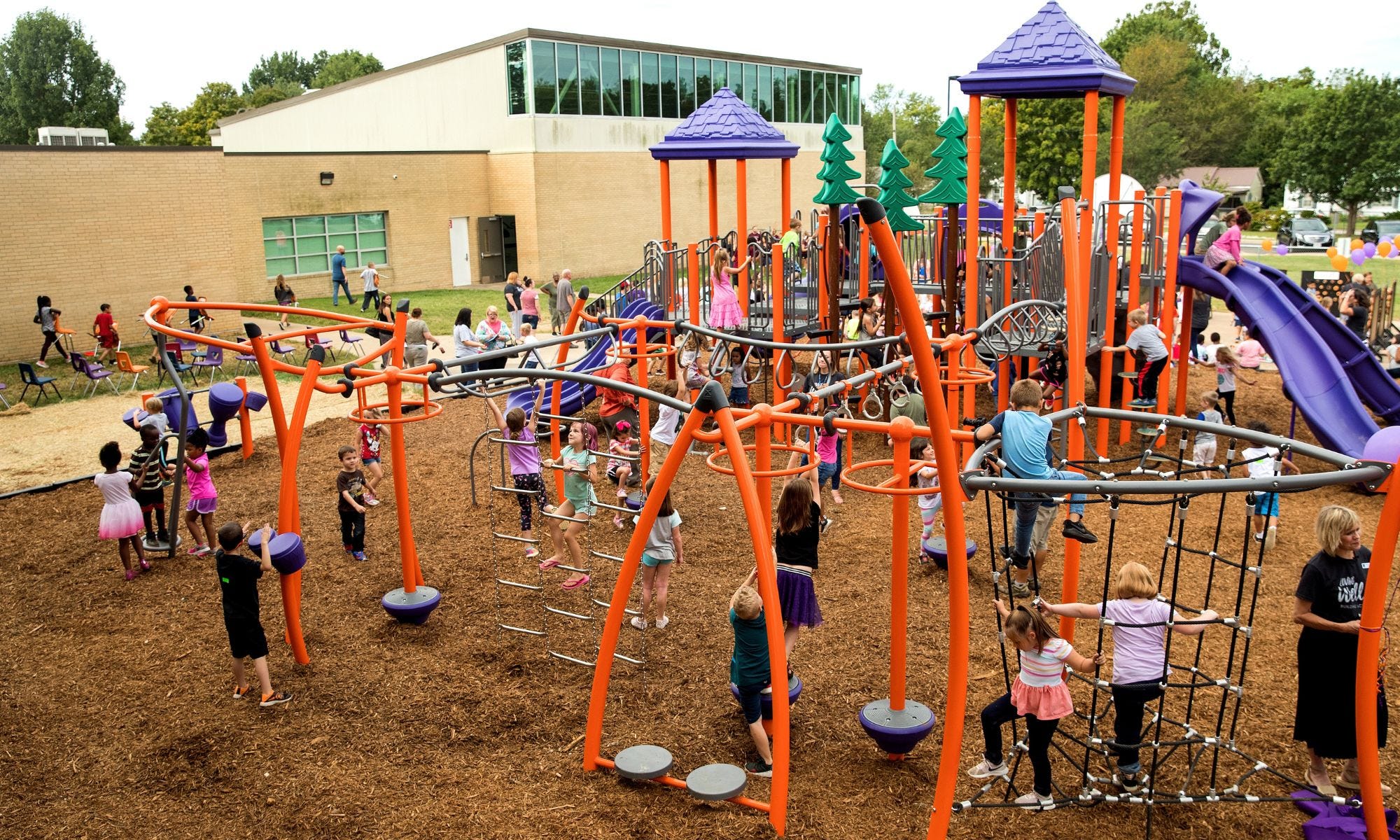
Play On! at Weller Elementary
The community’s pioneering attitude toward shared use also led several local elementary schools to participate in a national research study on the value of the Play On! program as a component of elementary school physical education. Through a research grant funded by SHAPE America, Dr. Yuanglong Liu and Dr. Suzan F. Ayers of the Department of Health, Physical Education, and Recreation at Western Michigan University developed and implemented an objective analysis of the Play On! Playground Activities.
They conducted a national study to evaluate the program, which included nine Springfield‑Greene County schools chosen through a national Beta Site selection process administered by SHAPE America. Schools volunteered by submitting applications to participate. The research included pre‑ and post‑intervention surveys completed by teachers, children, and parents, as well as two focus groups at one Beta Site to qualitatively measure physical activity and skill development.
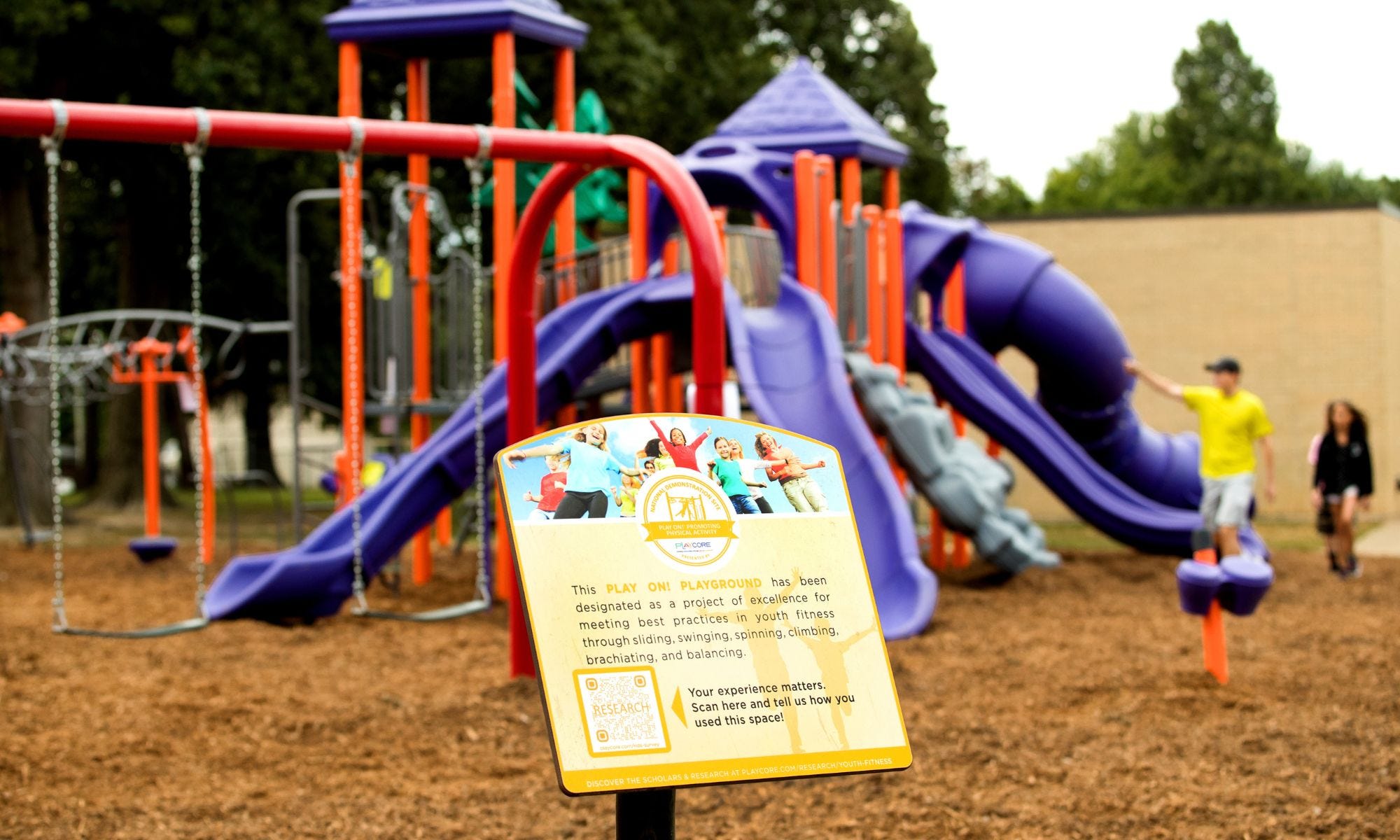
Nine of the participating schools were in Springfield. At the time, Superintendent Peggy Riggs was eager to explore ways to maximize playground usage while supporting opportunities for students and educators to expand physical activity through curriculum.
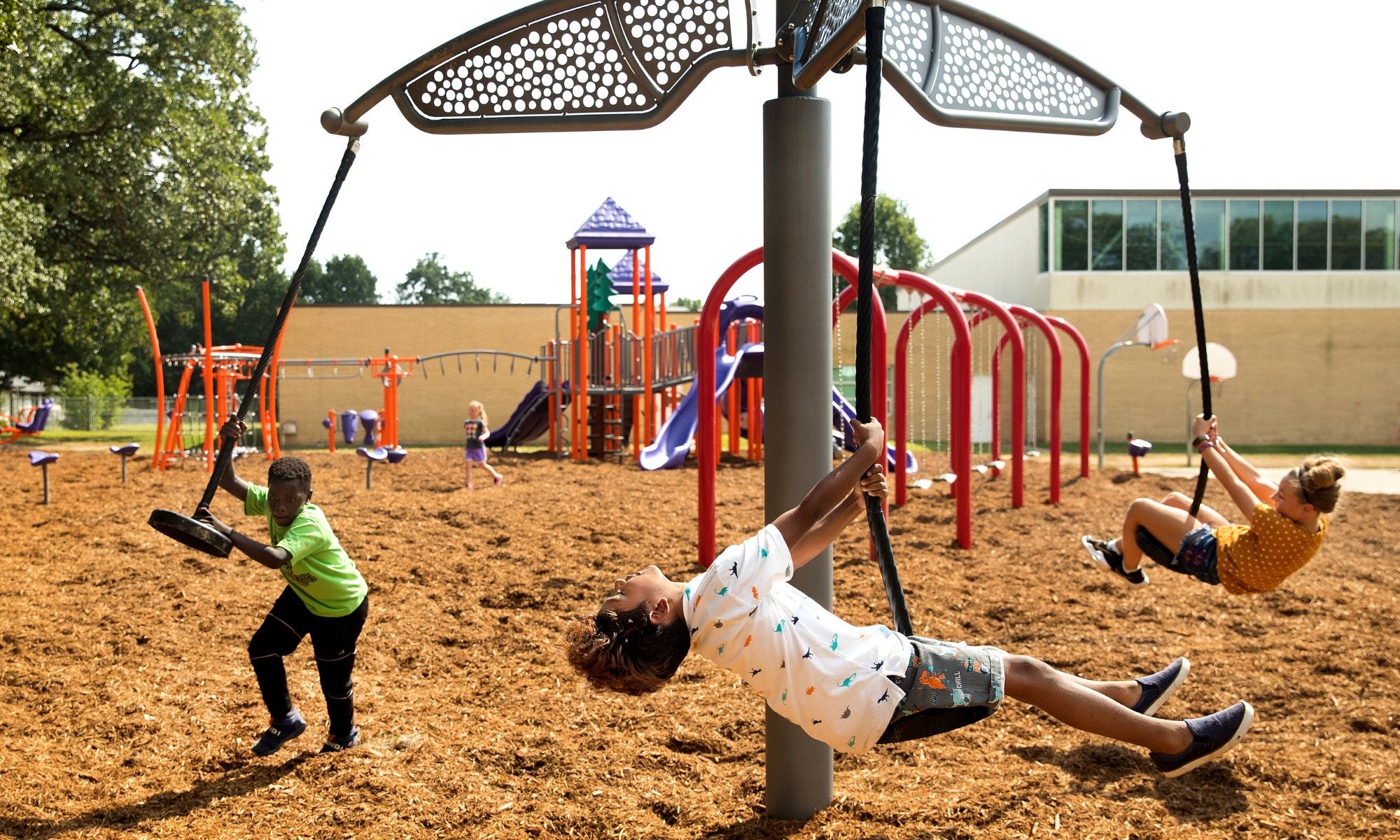
Physical education teachers received training on implementing Play On! Playground Activities and led physical education sessions on the playground. Teachers noted that all students were active simultaneously—unlike traditional activities that require waiting for turns—and that even children who typically didn’t enjoy physical education loved Play On! because play feels fun rather than like exercise. Each session included a warm‑up or energizer, a main activity, and a wrap‑up. Students wore accelerometers to track movement quantity and intensity, providing objective measures of sedentary, light, and moderate‑to‑vigorous activity.
Guides in English and Spanish were sent home to inform families about the program and encourage after‑school, family‑centered usage of the Play On! activities in the park setting. The materials stressed the importance of continuing healthy behaviors at home and encouraged families to use the shared school/park locations on evenings and weekends. Students could practice skills at home, join family events such as Family Fitness Nights, and complete home‑based challenges. Schools could further promote participation by hosting parent‑teacher events, providing family‑friendly resources and modifications, and inviting families to attend or observe classes.
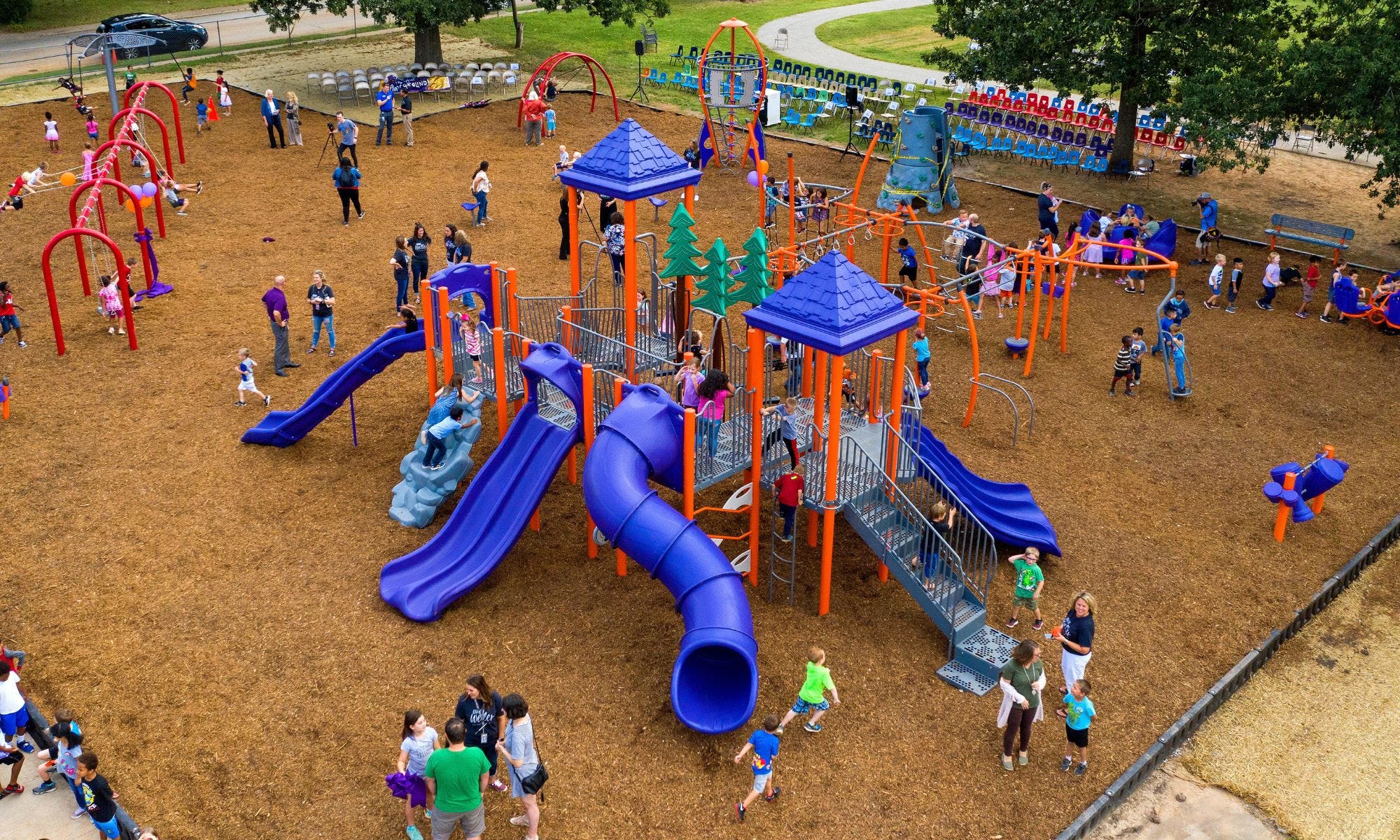
Healthier and Happier Tomorrows
The Springfield‑Greene County School District continues to prioritize healthy schools by supporting wellness, good nutrition, and regular physical activity as part of a comprehensive learning environment. These efforts help children develop positive lifestyle and dietary habits that carry into adulthood. See the findings from this study in the Research and Evaluation section of this guide.
Physical education teacher Ann Holcomb of Fultondale Elementary in Springfield‑Greene County added:
“By incorporating the Play On! program with our playground, we can help teach children other fun activities. My philosophy of educating children and physical fitness is to give every student the opportunity to learn a variety of activities that they can use throughout their lifetime.”
This case study was sourced from the Play On! Design Guide developed by PlayCore. To learn more, visit Play On!®