More physical activity in childhood is associated with better cognition and academic success. The evidence is clear. That is why designing a school playground should never begin with a simple question like, “How many kids can fit out there?” It should begin with a better one: “What do we want this space to help students do?”
When schools approach school playground design through that lens, the conversation changes fast. The playground stops being a recess-only amenity and starts becoming a tool for movement, regulation, skill-building, and school-day readiness. That does not mean every school playground has to look the same. It does mean every school playground should be designed on purpose.
Play On! is one of the clearest frameworks available for doing exactly that. Developed by PlayCore in partnership with SHAPE America, it gives schools a research-based way to think about school playground equipment, physical activity, and standards-aligned programming as one connected system rather than three unrelated decisions.

Start with the six elements that matter most
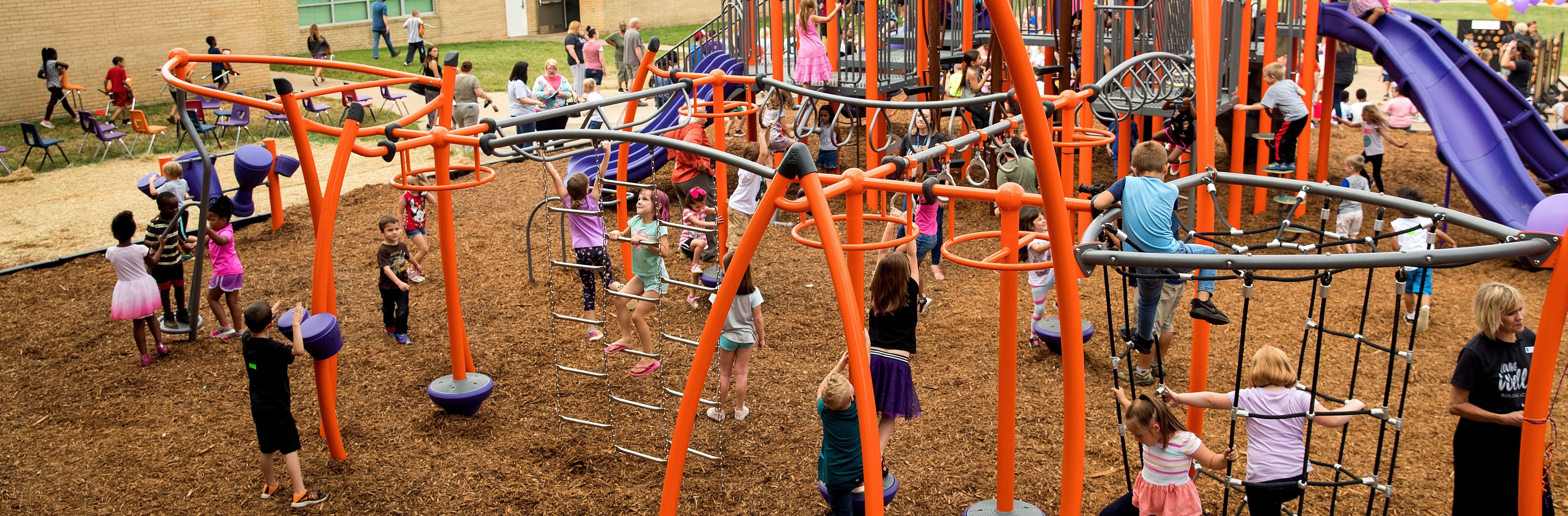
The Play On! framework centers school playground design around six key elements of active play: balancing, brachiating, climbing, sliding, spinning, and swinging. That matters because the goal is not just to fill a site with activity. The goal is to provide a well-rounded movement environment that helps students build strength, coordination, body awareness, confidence, and fitness through play.
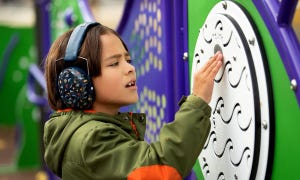
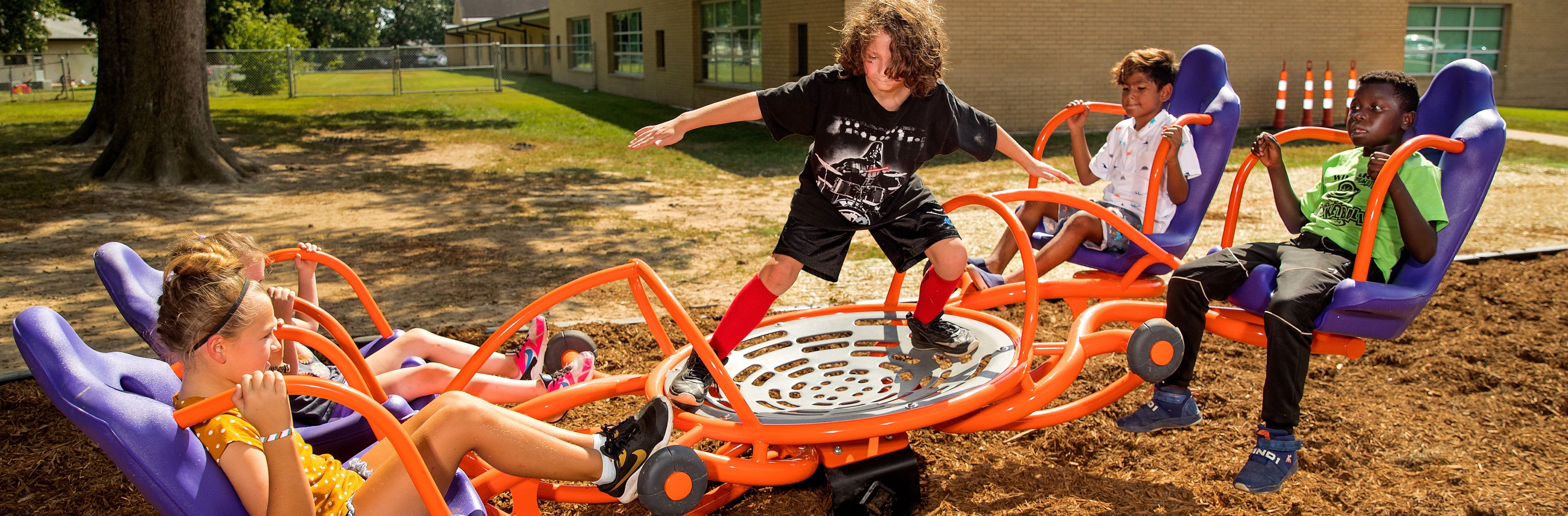
Each element brings something different to the table. Balancing supports control and stability. Brachiating builds upper-body strength and coordination. Climbing challenges full-body strength, planning, and persistence. Sliding adds spatial awareness and dynamic movement. Spinning supports kinesthetic awareness and postural control. Swinging promotes whole-body movement and rhythmic timing. When a school playground includes all six, it starts to function less like a random collection of structures and more like an intentional outdoor learning environment.
Use school playground design to create progression, not chaos
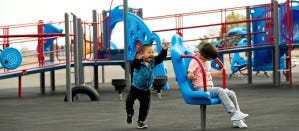
One of the smartest ideas inside Play On! is that designing school playgrounds should include levels of challenge. Children do not all move, grow, or build confidence at the same pace, so a strong school playground design gives beginners, intermediate users, and more advanced movers a place to play successfully. That progression is good for inclusion, good for safety, and good for student confidence.
This is where many school playground projects miss the mark. They confuse quantity with quality. More pieces do not automatically mean better play. A better school playground is one where students can enter the space at their skill level, find success quickly, and then be tempted forward by the next challenge. That is how movement becomes habit instead of frustration.
Design the layout for movement patterns students actually use
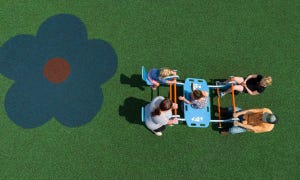
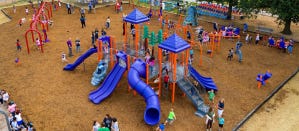
School playground equipment matters, but layout matters just as much. Play On! recommends creating connecting play patterns, which is a fancy way of saying the space should make movement feel natural. Slides should lead back toward climbers. Components should support intuitive loops, chasing games, and repeated use. Social opportunities should be built in so students can cooperate, play side by side, and stay engaged longer.
That layout logic is a big deal for academic success even though it does not look academic at first glance. Students who move more, wait less, and stay engaged longer get more benefit from the time they have outside. They return to class with fewer bottlenecks, fewer avoidable conflicts, and a better chance of being regulated enough to learn. Good school playground design is not just about what students do on the structure. It is about what the structure makes possible.
Design school playground equipment for PE, recess, and everything in between
This is one reason Play On! stands out as an essential design guide for schools. It does not stop at equipment selection. It pairs school playground design with 125 standards-based activities for grades PreK-5, assessment tools, implementation strategies, family take-home resources, and alignment with SHAPE America’s National Physical Education Standards. In other words, it helps schools turn a school playground into a usable platform for instruction, not just a pretty installation.
The research summary is worth paying attention to. In a SHAPE America-sponsored Play On! study involving roughly 6,000 children across 14 schools in five states, 91% of teachers reported that playground use increased, 90% planned to keep using the activities, and activity intensity measured 38% higher during Play On! activities than during free play. That is not a small bump. That is proof that design plus programming can move the needle.
Why Play On! should be in every school playground planning conversation
Schools already expect indoor environments to support educational outcomes. Play On! makes the case that the outdoor environment should do the same. It gives school teams a practical way to align school playground equipment with wellness goals, PE standards, recess strategy, and family engagement. It also helps schools maximize the value of an investment that will be used before school, during school, after school, and often by the wider community.
That is the real win. A better school playground design does not ask the playground to compete with academics. It asks the playground to support academics by supporting the whole child. That is a much smarter brief.
Build the Ideal Playground
Schools do not need a school playground that only looks impressive on opening day. They need a school playground that keeps earning its keep, year after year, by helping students move more, regulate better, and come back to the classroom more ready to learn. Designing a school playground around research, progression, programming, and purposeful school playground equipment is one of the simplest ways to make outdoor space work harder for academic success. To start planning your school playground, contact your local GameTime school playground expert.