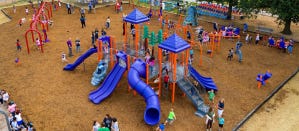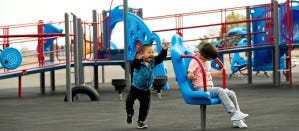
School playgrounds are no longer “extra.” They are infrastructure. They are learning environments. They are public health tools. They are social laboratories.
When designed intentionally, playgrounds influence how students move, connect, regulate, learn, and belong. And when school districts plan playground projects across multiple sites at once, the opportunity grows exponentially.
The real question isn’t should we invest? It’s: How do we do it strategically, efficiently, and measurably?
Why School Playgrounds Matter More Than Ever
Children need movement to support attention, behavior, mood, memory, and academic performance. Play builds social intelligence. Risk builds resilience. Belonging builds confidence.
Recess is often the most active part of a child’s school day. For many students, it is the primary opportunity to achieve moderate-to-vigorous physical activity (MVPA). Without well-designed outdoor environments, students simply do not move enough.
A playground is not just equipment. It is:
- A structured opportunity for physical development
- A social arena for collaboration and conflict resolution
- A space for imagination and creativity
- A daily dose of joy
When districts treat playgrounds as strategic assets rather than line items, outcomes shift.
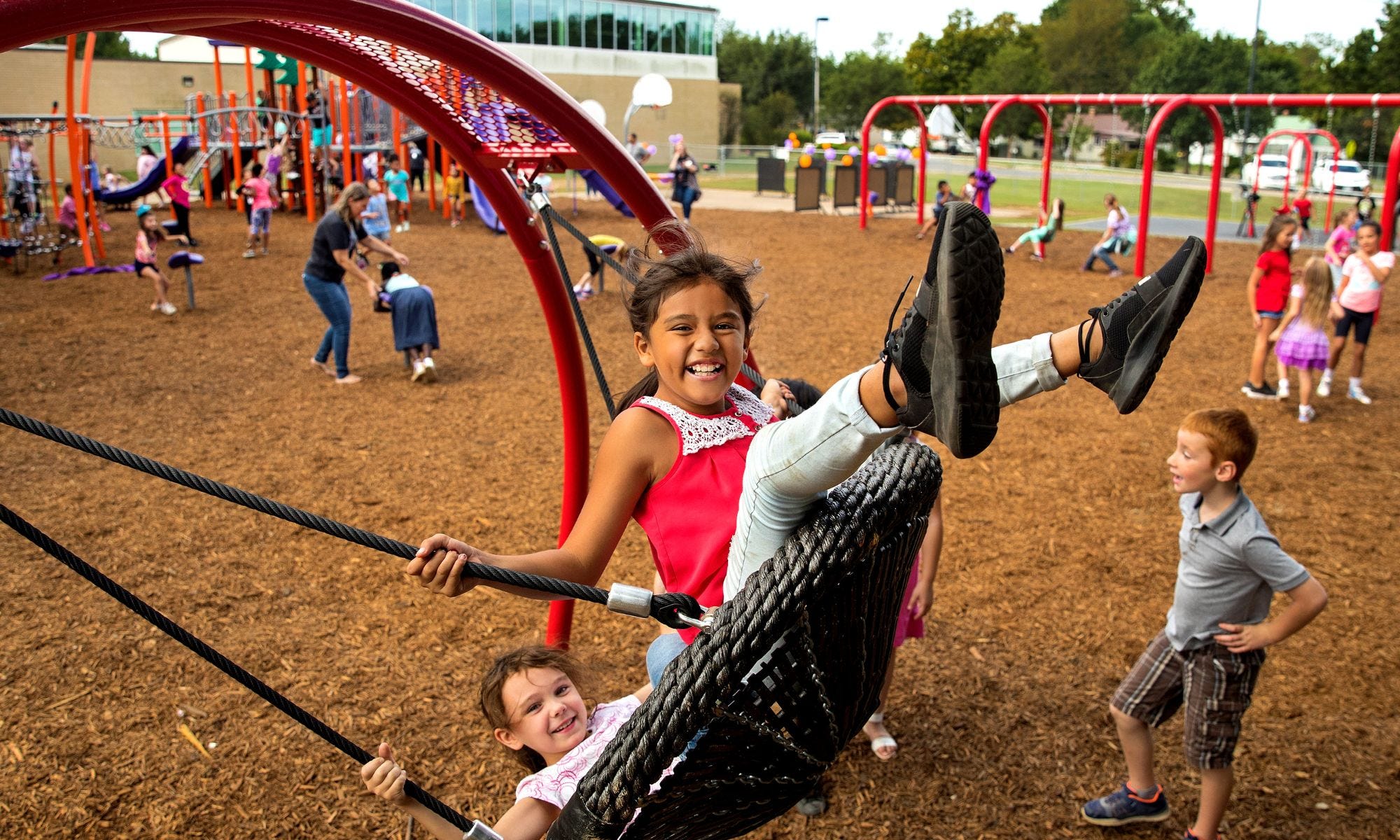
The Case for Multi-Site Planning
For districts managing multiple campuses, planning playgrounds one school at a time often leads to inconsistent quality, budget inefficiencies, and missed opportunities for scale.
Working with an experienced national partner like GameTime allows districts to approach multi-site projects as a unified strategy rather than fragmented purchases.
Budget Savings Through Scale
When districts plan all projects at once, they unlock:
- Bulk purchasing efficiencies on equipment and surfacing
- Streamlined design processes across campuses
- Reduced mobilization and installation costs
- Standardized specifications that simplify procurement
- Coordinated logistics that minimize disruption
Instead of repeating design fees and procurement processes school by school, districts create one scalable framework. That means more dollars directed toward students, not administration.
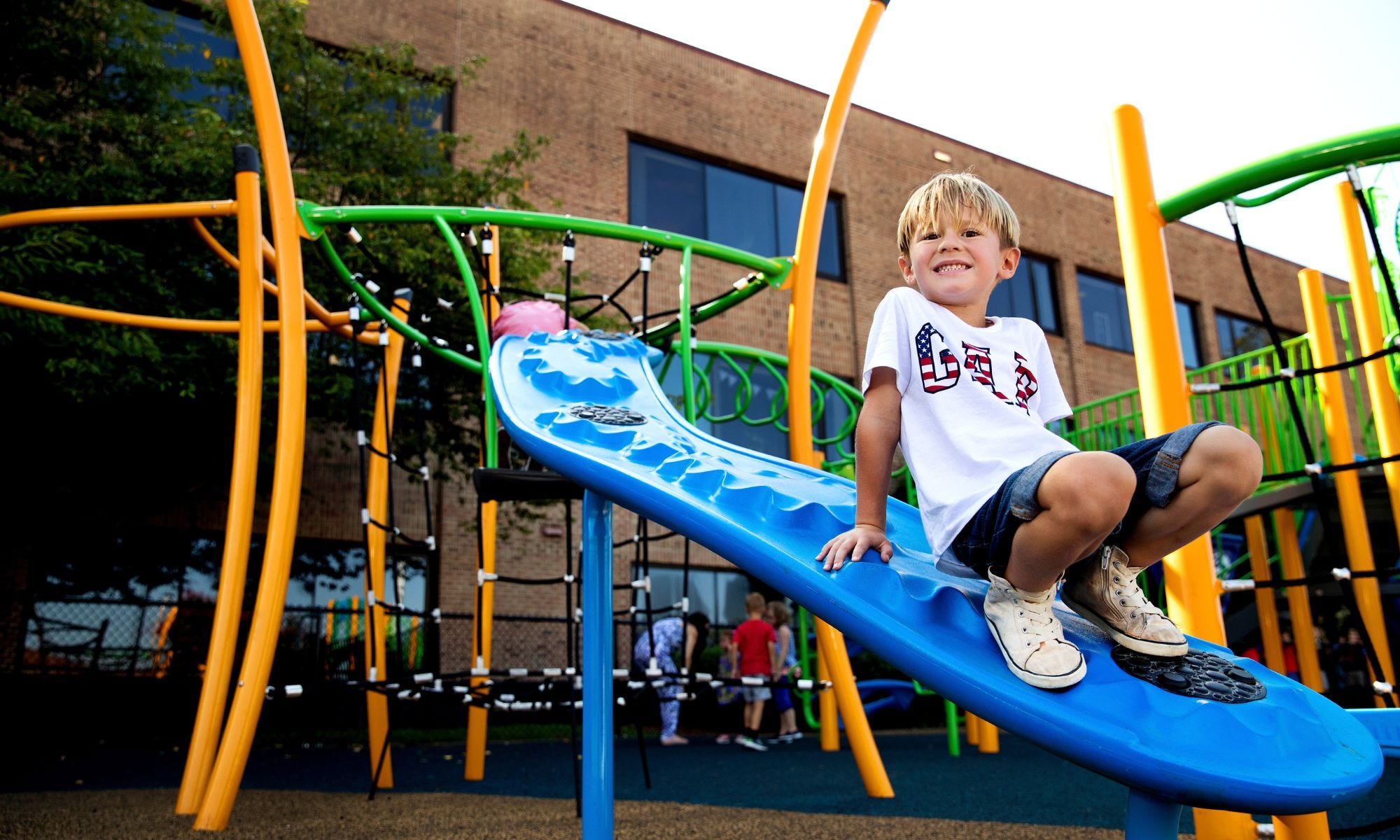
Maximizing Capital Planning
Planning multiple sites together allows districts to:
- Prioritize schools based on need
- Phase installation strategically
- Align playground investments with bond initiatives
- Standardize maintenance planning
- Create equity across campuses
When you zoom out and plan comprehensively, you don’t just build playgrounds. You build district-wide consistency.
The Power of Research: Designing with Play On!
Design matters. Not all playgrounds are created equal. Play On! best practice research ensures playgrounds are designed intentionally to support physical activity, inclusion, and developmental outcomes.
Using Play On! research means your playgrounds are built around evidence-based principles, including:
- Designing zones for varied activity levels
- Encouraging MVPA through layout and equipment choice
- Integrating inclusive play strategies
- Supporting cognitive and social development
- Aligning with Whole Child and public health standards
When districts apply Play On! principles across multiple sites, they create a cohesive philosophy of play.
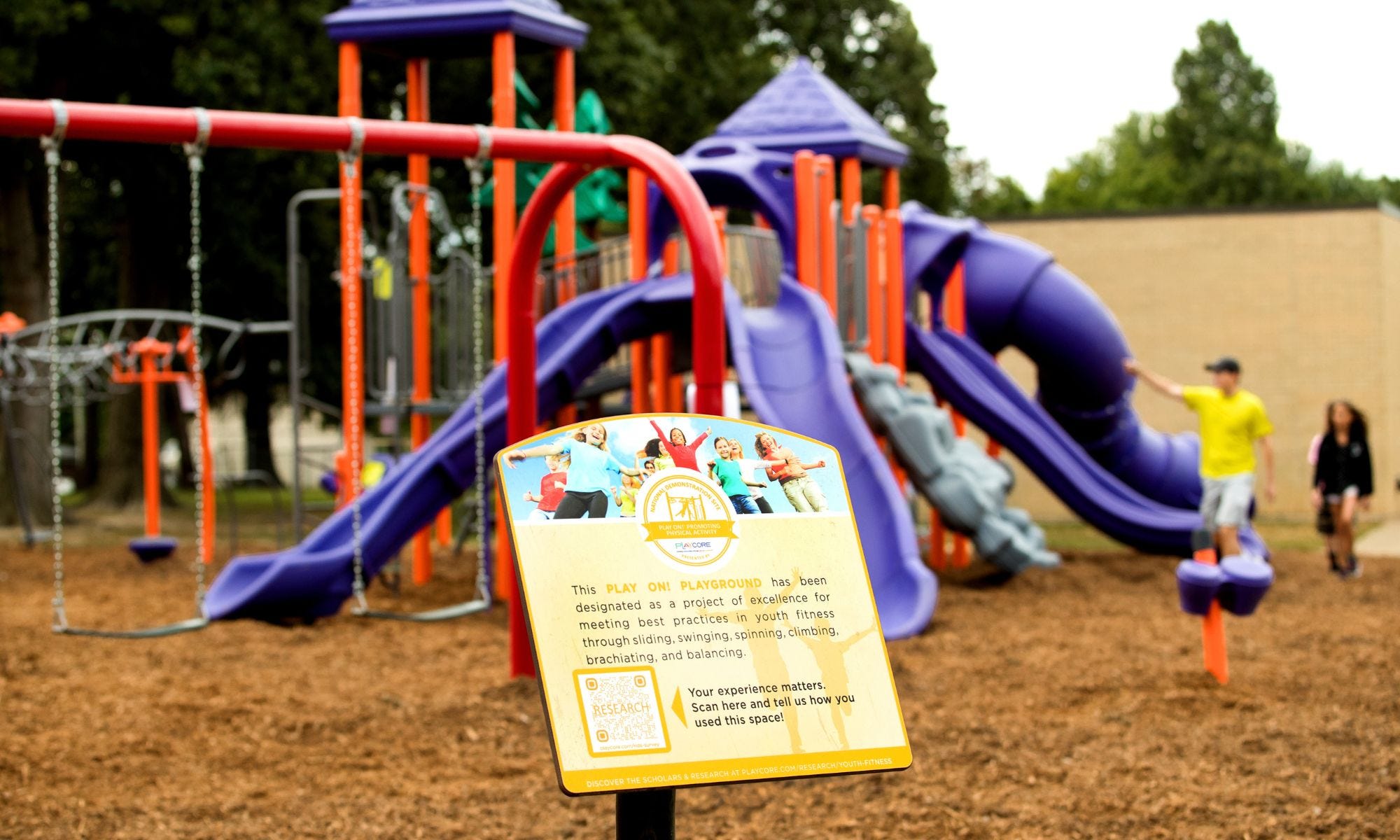
National Demonstration Sites: Turning Play into Proof
Participating schools receive outcomes reports that help districts measure:
- Increases in physical activity
- Improvements in social engagement
- Indicators of emotional wellness
- Academic correlations tied to movement
For a district, this means your investment becomes measurable. The data informs future bond campaigns, supports grant applications, demonstrates accountability, and proves impact.
Designing for Maximum MVPA
One of the most important design goals for modern playgrounds is increasing moderate-to-vigorous physical activity.
Intentional design considers:
- Circulation patterns that keep students moving
- Equipment that encourages climbing, spinning, swinging, and balancing
- Distributed activity zones to reduce congestion
- Age-appropriate challenge levels
- Sightlines for supervision
Well-designed playgrounds naturally invite motion and sustained activity.
Designing for Inclusion: Every Student, Every Day
Inclusion is not a ramp. It is a mindset.
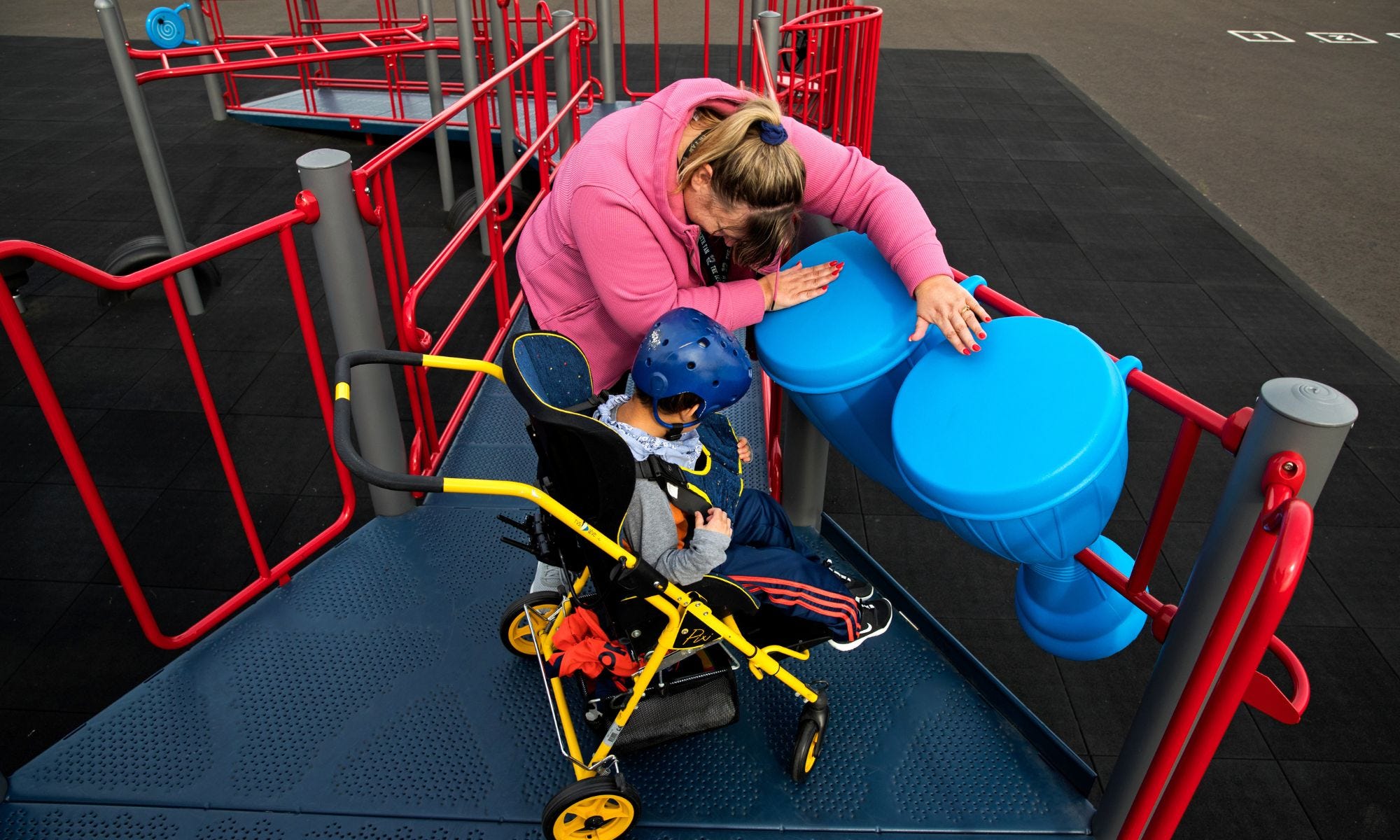
Designing for inclusion ensures that students of all abilities can participate meaningfully in play. This includes:
- Ground-level activities
- Sensory-rich elements
- Accessible routes
- Social play opportunities
- Quiet retreat spaces
- Equipment that supports cooperative interaction
Inclusive playgrounds foster empathy, normalize difference, and eliminate isolation.
Why Experience and Scalability Matter
Multi-site playground projects require coordination, expertise, and logistical precision.
An experienced partner like GameTime brings:
- National installation networks
- Dedicated project management teams
- Research-backed design expertise
- Long-term maintenance planning
- Procurement guidance
- Bond and funding support
Experience reduces risk. Scalability increases efficiency. Consistency ensures equity.
A District-Wide Vision for Play
Imagine a district where every campus reflects the same commitment to movement, inclusion, and research-driven design. Imagine board meetings where outcomes reports demonstrate measurable gains. Imagine families seeing visible evidence of investment in student wellness.
When playground planning becomes strategic, unified, and research-informed, it transforms from a facilities project into a district-wide initiative.
Final Thought
School playgrounds shape more than recess. They shape childhood, community, and future adults.
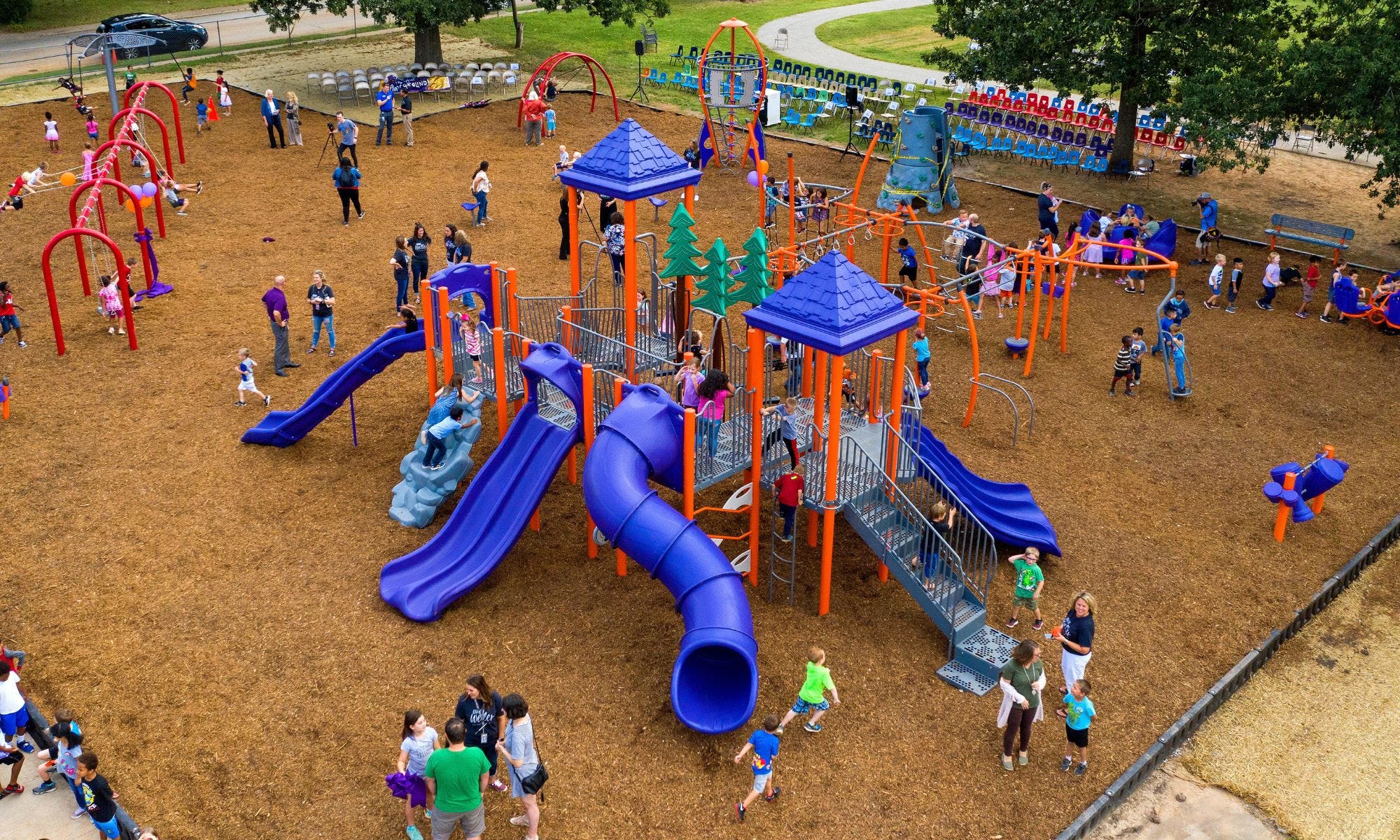
Districts that approach multi-site playground projects holistically, leverage Play On! research, pursue National Demonstration Site recognition, and design for both MVPA and inclusion are not just installing equipment.
They are investing in health.
They are investing in belonging.
They are investing in learning.
And when done at scale, that investment multiplies.