Everyone has their own memories of playing on their school’s playground. You’d dash to the spot where your friends usually gathered, thrilled to find they were already casting roles for today’s game of “house.” Mimicking your role models, you’d repeat lines your mom often told you: do your homework, eat your dinner, and yes, your socks matching does actually matter.
“House” is a great example of dramatic and social play. It’s a collaborative fantasy children create together, building on each other’s ideas as the narrative unfolds. For many children with autism, this imaginative framework makes peer interaction more predictable—and therefore less intimidating—while also giving them a fun, meaningful way to share their interests and feel understood.
Read on to discover how your school’s playground design can empower children with autism to build meaningful peer connections.
What is Dramatic and Social Play?
Dramatic play is a type of imaginative play where children take on different roles to create stories together. On a school playground, that might look like children turning a play structure into a pirate ship, acting out a superhero adventure on the swings, or—of course—finding a creative way to play house.
Through dramatic play, children practice communication, problem-solving, self-expression, and cooperation. They learn how to take turns, assign roles, negotiate ideas, and respond to others in real time. In many ways, dramatic play helps children make sense of the world around them while building the social and emotional skills they’ll use their entire life.
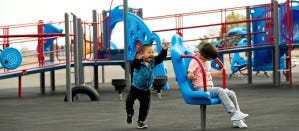
Social play is any type of play that encourages children to interact with others. On a school playground, social play happens when children play games together, take turns on equipment, invent group activities, or solve problems as a team. These interactions help children build the social and emotional skills they need to form friendships and navigate group settings.
Social play is closely tied to a child’s sense of belonging. For many, the playground is where they first feel like part of a group. Unlike classroom desks, which create forced proximity, playgrounds give children the freedom to choose who they interact with and how they build connections. These experiences help children develop autonomy and their sense of identity.
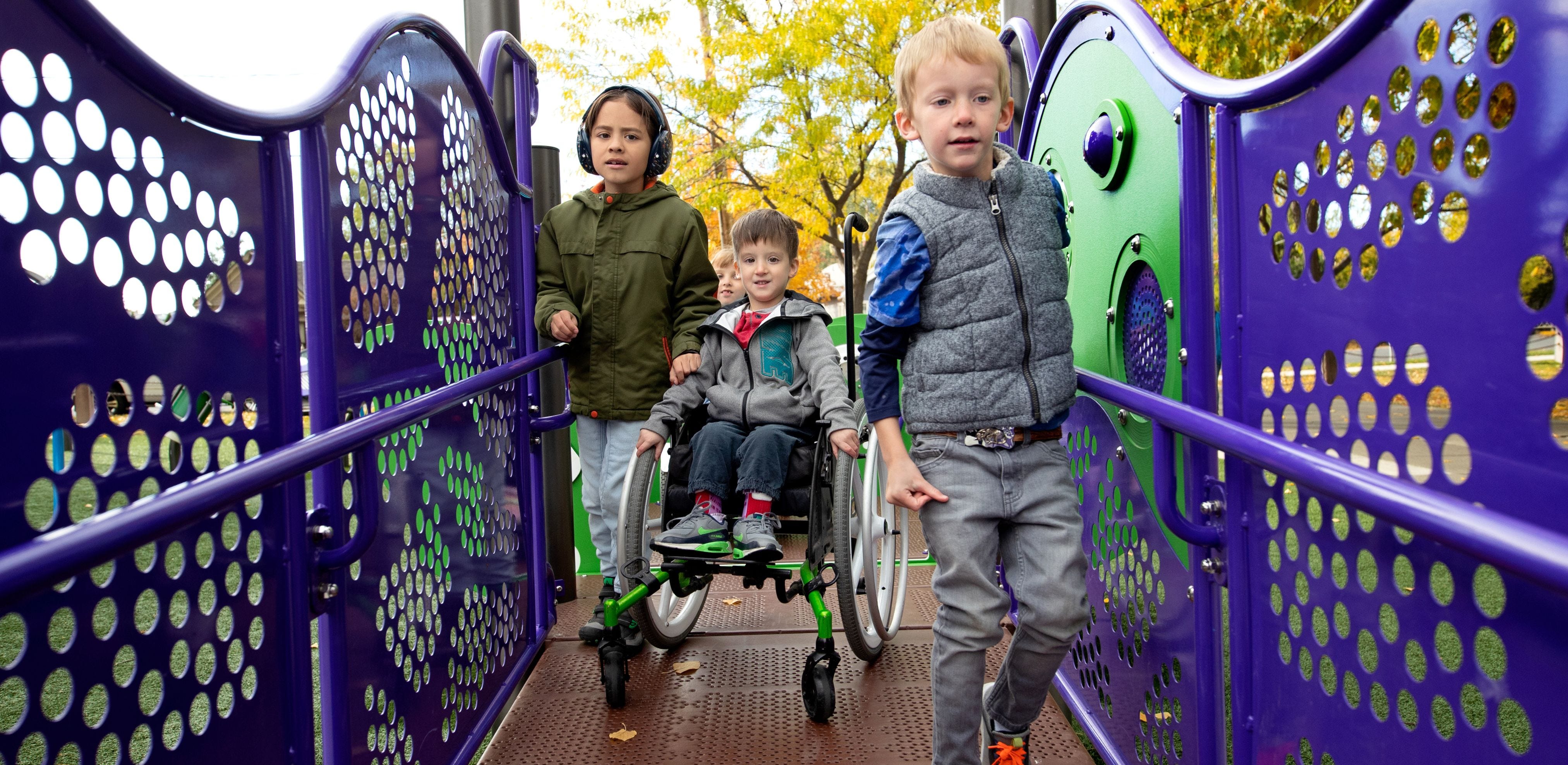
Supporting Children with Autism Through Dramatic and Social Play
On a standard playground, children with disabilities like Autism Spectrum Disorder spend more time alone (30 vs 9%) and less time engaged with their peers (42 vs 72%) compared to children without disabilities.¹ However, children with autism are just as excited to engage in play as neurotypical children—they just thrive in different environments.
Children with autism want to make decisions carefully and plan ahead.² Dramatic play gives children a role to step into within a larger predictable story, empowering children to make informed decisions based on their familiarity with the topic. Playground design elements that prompt dramatic play, such as a play house, create tangible experiences that help children with autism participate fully in the shared narrative.³
Keeping sociodramatic play props consistent, such as those built into fixed equipment, is ideal for children with autism because they thrive with routine and consistency.⁴ When you foster a predictable environment, children with autism can observe patterns and find their own play style—helping them feel more comfortable to seek out connections with peers.
School Playground Equipment for Dramatic and Social Play
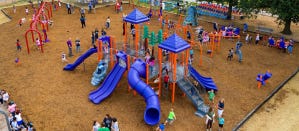
While children are naturally creative and can turn almost anything into a story, intentional design can help spark those first moments of connection—especially for children with autism.
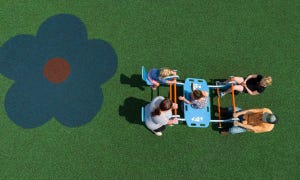
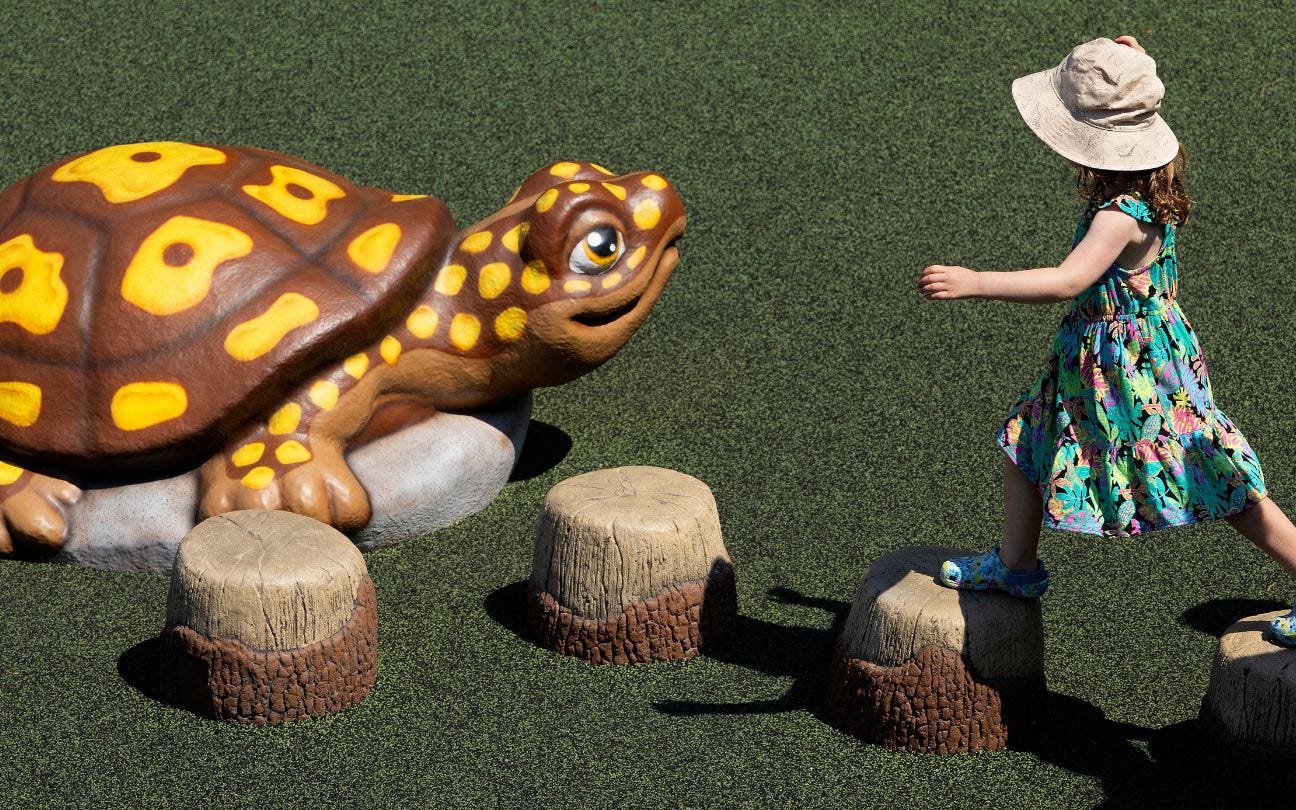
Hand-sculpted from our TuffCrete and Polyshield materials, GameTime’s collection of themed play sculptures are both highly durable and rich in detail, creating immersive environments that encourage predictable storylines during imaginative play. From flowers and mushrooms to giant turtles, each sculpture helps bring a playground’s theme to life, offering children familiar elements they can build stories around together.
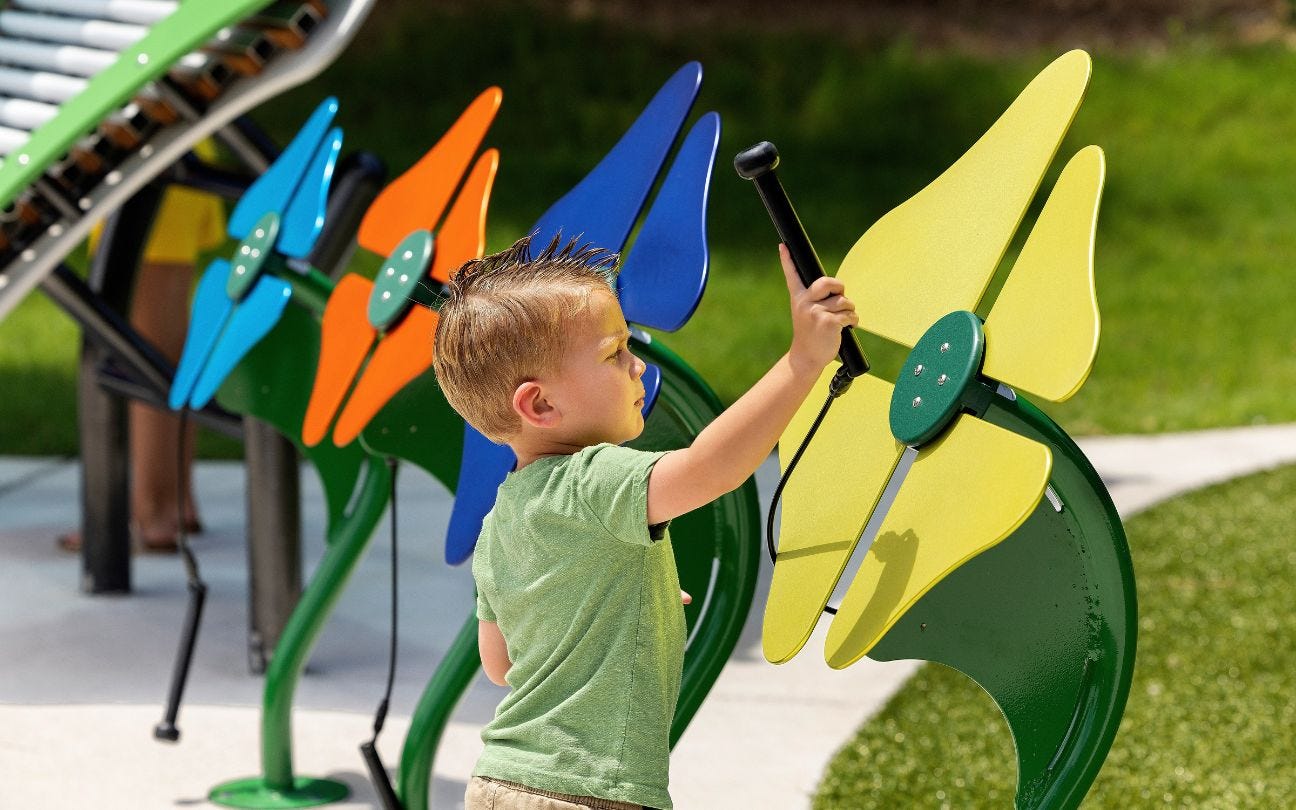
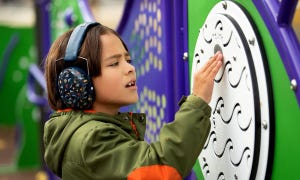
Music is a powerful way for children to express themselves, and for many children with autism, it can feel more natural than words. Incorporating musical play into the playground can create meaningful opportunities for connection and self-expression between children of all abilities.
Percussive play instruments, designed in whimsical shapes like flowers and butterflies, invite children to explore rhythm and sound while using their imagination. Installed at accessible heights, these instruments ensure everybody can participate comfortably, creating a shared, welcoming space.
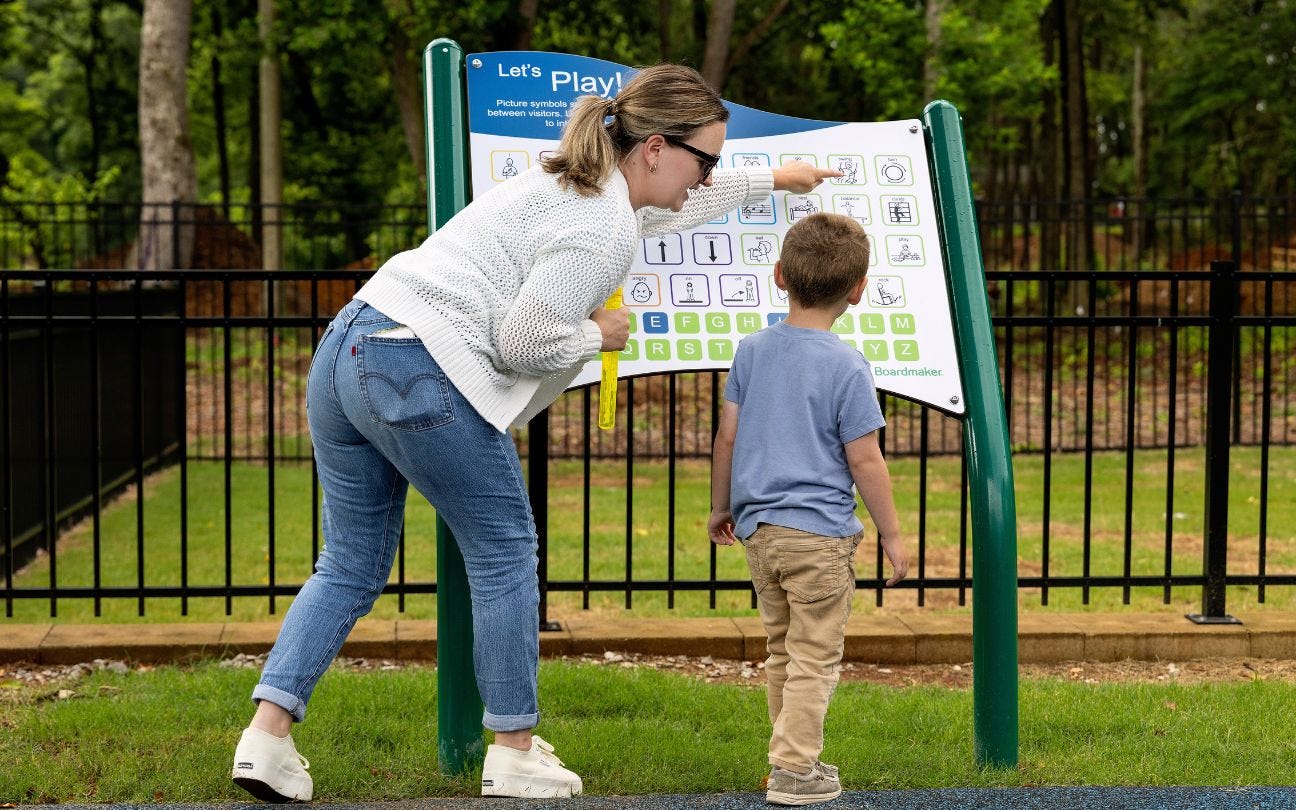
For some children with autism, expressing ideas might require additional tools. The Communication Panel, featuring Boardmaker PCS symbols, offers a supportive, inclusive way for children to share their thoughts and feelings with peers. By providing recognizable visual cues, these panels help bridge communication gaps, making it easier for children with autism to fully participate in play.
Building School Playgrounds That Inspire Connection
Dramatic play and social interaction are at the heart of what makes school playgrounds transformative. These experiences turn playgrounds into stories, creating opportunities to seek connection through imagination.
When schools prioritize dramatic and social play, they create environments where children with autism aren’t just observing from the sidelines—they’re actively engaged in play, supported by a space designed to help them thrive.
Ready to bring these experiences to life? Contact your local GameTime representative to start planning your school playground today.
____________________________________________________________________________
¹Locke J, Shih W, Kretzmann M, Kasari C. Examining playground engagement between elementary school children with and without autism spectrum disorder. Autism. 2016;20:653-62.
²Brewster S, Coleyshaw L. Participation or exclusion? Perspectives of pupils with autistic spectrum disorders on their participation in leisure activities. British Journal of Learning Disabilities. 2011;39(4):284-91.
³Westby C. Playing to pretend or “pretending” to play: Play in children with autism spectrum disorder. Seminars in Speech and Language. 2022;43(4):331-346.
⁴Yuill N, Strieth S, Roake C, Aspden R, Todd B. Brief report: Designing a playground for children with autistic spectrum disorders––effects on playful peer interactions. Journal of autism and developmental disorders. 2007;37(6):1192-6.